In the wild and ever-changing world of digital marketing, it’s hard to know what’s best for your site, particularly when every advertiser claims to have the perfect tool for your needs.
To avoid falling prey to a sales pitch, you must understand the strategies out there and what they could mean for your website.
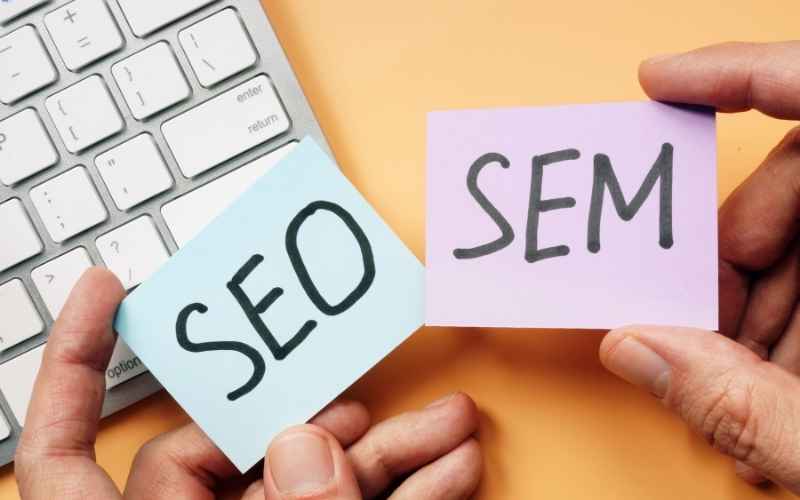
Search engine optimization (SEO) and search engine marketing (SEM) are two different tactics for improving your search engine results page (SERP) visibility and, ultimately, site traffic. SEM is a paid service that places your digital real estate in promoted page results. On the other hand, SEO is a set of best practices to improve your organic search results.
There is more to it than merely comparing upfront costs. Both SERP tools have value, and in some cases, work well together!
To keep you in the know, let’s go over the cost of SEO vs. SEM. We will talk about the upfront cost of both SERP tools and each tactic’s value for your money.
NEED HELP WITH YOUR SEO OR SEM?
If you're ready to take your SEO and Search Engine Marketing to the next level, I'm here to help. Book a call with me today!
SEM is search engine marketing or pay-per-click marketing. The most common platform for SEM pay per click is Google Ads.
A common misconception about SEM is that it doesn’t generate organic search results because it’s a paid service. Google Ads services will create a custom ad for your chosen keywords and charge you a flat fee per click. In order to be successful, you need to have a solid search engine marketing strategy.
To use SEM with impact, you need to choose your keywords with care to ensure a query will return a relevant SERP page. Once a viewer lands on a SERP page that includes your ad, you then must entice viewers with that ad.
Google Ads has an infinitely flexible budget. You set the amount you want to pay and can adjust at any time. Of course, the more you spend, the better you can expect your results to be. A reasonable starting budget is anywhere between $100-$500 per month for a new entrepreneur.
If your budget allows, you may wish to move past just appearing on a SERP. You might consider an SEO-focused digital marketing agency like my agency — Pave SEO. We offer comprehensive, hands-off SEO services. Not only can we improve your Google visibility with a tailored search engine marketing strategy but we can help you improve your email marketing campaigns as well.
SEO Vs. SEM | Cost-Benefit Analysis
SEO is about investing in yourself and your content. Unlike SEM, the research and content editing you put into your on-page SEO are yours to keep. That isn’t to say it’s a once-off payment, either.
Search engine optimization best practices are evergreen. That means you are responsible for keeping the content fresh with SEO self check-ups and editing. They may need a touch-up, but the impactful marketing content of your on-page SEO endeavors are yours forever.
SEO agency services can be costly. Tools offered by companies like Ahrefs offer full-service solutions for on-page SEO and technical SEO, but these are tools that you must learn in order to get the full benefit from them. Most SEO agencies expect a budget of $2000 per month before they want to step in.
The good news is, DIY SEO has never been easier! By utilizing a small number of freelancers and investing in your personal growth, a starting DIY SEO budget can be $100-$200 a month! Best of all, your SEO budget isn’t just rent on Google ad space. Every penny you spend stays with you in the form of impactful, optimized content.
SEO Vs. SEM | Which Cost More?
While SEO seems costly, it is actually more cost effective and less expensive than SEM. Because the effects of SEO are evergreen, you receive more return on your investment (ROI) over time.
Ultimately, SEM is only effective while you pay for it. The moment you stop, all the money you have spent so far might seem to disappear overnight. The hope is that through pay-per-click marketing campaigns, you will have gained a foothold in your niche and gotten some email subscribers along the way.
Search engine marketing is only a foot in the door. You pay for each click that leads to your site, but if your lead magnets aren’t performing, that’s money down the drain. SEM can be a fast and effective tool for customer conversion at a set price with the aid of hard-working landing pages. Once you have established your presence, you can choose to dial back or eliminate your SEM costs.
Remember that to set up a pay-per-click Google ads campaign, some keyword research is required. You may choose to do this yourself or hire an on-page SEO content editor. Either way, you can’t have SEM without dipping your toes in the waters of SEO.
NEED HELP WITH YOUR SEO OR SEM?
If you're ready to take your SEO and Search Engine Marketing to the next level, I'm here to help. Book a call with me today!
If you have the budget, the know-how, and the drive, SEO and SEM can work side by side to make your digital real estate a lakefront property, so to speak. You don’t have to choose one or the other. Of course, the budget dictates certain things, especially for the new entrepreneur.
If it comes down to SEO vs. SEM for you, remember that you will need SEO either way.
While the upfront cost is harder to determine, the benefits of a good SEO campaign on your organic search results are a lasting effect if you have the willingness to learn some DIY SEO, even better.
You can pay the fisherman of SEM as long as you like, but sooner or later, you are better off buying a rod! Remember, the best investment you can make is to invest in yourself.
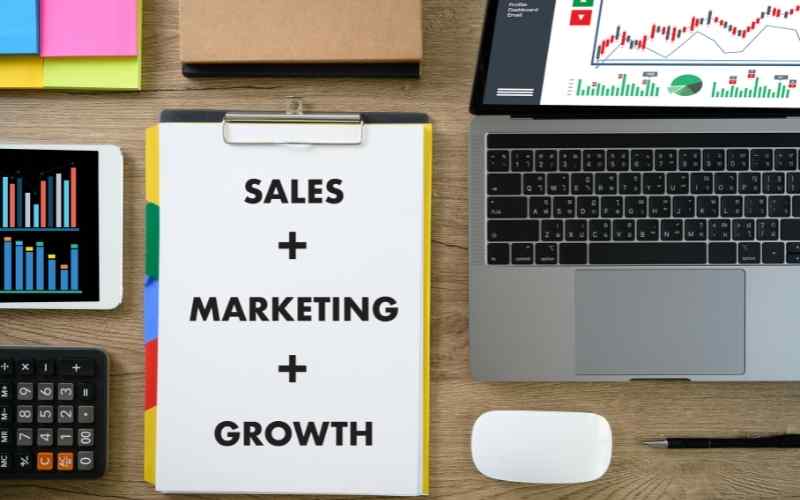
Sales vs. marketing. What's the difference and how can understanding each help you in both areas? First up, let's dive in with a sales and marketing definition.
Sales Vs. Marketing
Marketing refers to brand awareness campaigns and lead generation. Sales focus on closing the deal and converting a lead into a customer.
Those two might sound like the same thing, and they have a lot in common! The difference is in the end goal.
Marketing is all about generating traffic. By wielding the power of SEO and SEM, a marketing campaign aims to draw as many eyes as possible to your content. An expertly employed marketing campaign results in increased site traffic, brand awareness, and most importantly, lead generation.
But what about customer conversion? The point of digital marketing is to attract clients. Don't worry. Our sales and marketing definition has two parts for a reason.
Once you have mastered lead generation and have a bold brand presence, you are ready for sales. Your digital marketing should have earned you an email list and social media following. Your digital marketing master plan will also have gathered vital info about who your viewers are and what they need. This info will help you sell to your leads.
You may be asking, why not sell directly? What's the harm in selling while you market?
That's why it is so important to understand this sales and marketing definition. Sales language can quickly drive away a visitor who is looking to be informed rather than treated to a sales pitch.
In our digital world, absolutely everyone is tired of looking at advertisements. Your marketing stage must aim to inform and interest, not sell. Only after establishing a lead and gathering some demographic information from your viewer should you attempt to deploy a targeted pitch.
I hope it has become clear that sales and marketing are two sides of the same strategic coin. Let's talk about how to keep that coin shiny!
READY TO FINE-TUNE YOUR SALES AND MARKETING SKILLS?
If you're serious about improving your sales and marketing efforts, I'm here to help. Book a call with me today!
It should be clear by now that sales and marketing must work hand in hand to accomplish their mutual goals for your company. Wondering how does sales and marketing work together?
In a large business with multi-member departments, a sales and marketing alignment is a formal agreement between those departments.
For a small business, where a small number of people carry out sales and marketing plans, a sales and marketing alignment takes the form of a cohesive set of best practices.
How to Craft Your Sales and Marketing Funnel
No matter the size of your organization, your sales and marketing funnel should not be separate entities. The key to sales and marketing alignment is making sure both groups are freely sharing information and taking direction from the same source.
Each step of your sales and marketing funnel serves to bring the customer closer to your end goal - customer conversion.
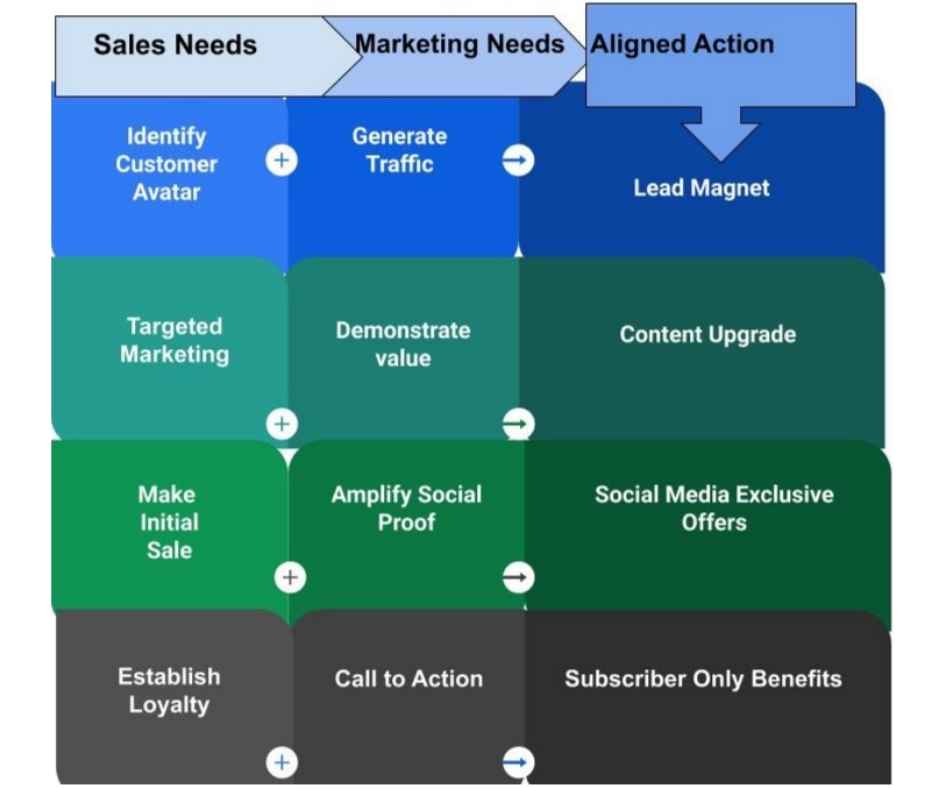
Here is an example of a sales and marketing plan that maintains sales and marketing alignment.
When read vertically, we see two separate plans—a sales plan and a marketing plan. Each column lists what each department needs to reach its goals. By lining them up, we see that each step can be accomplished by a single joint action in the third column when they work together.
That wasn't so hard, was it?
Closing Thoughts on Marketing Vs. Sales
Got the hang of marketing vs. sales yet? Or should we say, sales vs. marketing? Either way, do you have a complete understanding of how to deploy them in tandem for maximum efficacy? Hopefully you do!
You might be wondering, if this is so simple, why doesn't everyone do it?
Anything worthwhile takes effort. Just remember, to cement your sales and marketing alignment, you need a cohesive checklist for both sales and marketing. These two lists should lend each other strength without interfering with their individual goals.
Still not confident enough to get started and implement what you've learned on your own? That's okay! I am here to help you master these skills and grow your business. Whether you are a new laptop nomad or a seasoned small business owner, I have tools to help you.
Learning digital marketing basics and setting up one-on-one consultations with me are ways you can learn the basics or fine-tune your knowledge. The best investment you can make is self-investment.
The template above is a good start; that's my gift to you. When you are ready to return to the classroom and master these skills, I will be waiting for you.
READY TO FINE-TUNE YOUR SALES AND MARKETING SKILLS?
If you're serious about improving your sales and marketing efforts, I'm here to help. Book a call with me today!
When you think of sales, value-based selling probably doesn't come to mind. Most people might think of the famous ABC's of sales method.
Always Be Closing!
While the Glengarry Glen Ross method might inspire you, it is a few steps short of a coherent sales plan.
The point of any sales plan, no matter how simple or complex, is to close, right?
Not quite.
That might be good enough if you are an entry-level salesman working for a company you don’t care about. Remember, this isn’t just your day job. This is your company, your dream! When you are ready to share that dream, instead of just making a sale, you’re ready to get into the entrepreneurial mindset.
In the world of online sales, you aren’t Farmer Jack trying to peddle a cow. You are a reputable small business owner looking to forge a long term relationship with a client. The goal isn’t simply to make a sale but to attract a client online by demonstrating value and mutual benefit.
How do you move past the ABC's of sales method? Value-based selling!
What is Value-based Selling?
In value-based selling, it's all about demonstrating the value of your services to potential clients. Rather than the cut-and-run sales approach of the 1950’s car salesmen, your goal should always be to educate and assist your potential clients.
By taking care of their needs and understanding their unique problems, you can confidently sell, knowing you are forging a mutually beneficial relationship. In the wide world of the web, your potential clients know they have lots of options, and know what a sales pitch looks like. By starting off aiming to inform and assist rather than sell, you can rise above the noise of online sales culture and become the standout solution to your client’s needs.
Take the advice of the illustrious sales expert Patricia Fripp.
"To build a long-term, successful enterprise, when you don't close a sale, open a relationship."
Once you get into the entrepreneurial mindset, value-based selling makes total sense! In order to make the transition from salesman to educator and partner to your customer, you will need to learn a bit about their needs. To attract clients online and retain those clients through value-based selling, you will need to gather some info via lead magnets.
READY TO OFFER VALUE-BASED SELLING IN YOUR BUSINESS?
If you need guidance on your value-based offers, I'm here to help. Book a call with me today!
In order to offer value-based selling you need to know your customers (KYC) or clients. Specifically, you need to know some essential information about them. What problems are they facing? What are their values? How did they find out about you?
To answer these questions, you need a strong landing page with a landing page lead magnet. Your website traffic isn’t likely to hand you this vital sales data for free. By offering content upgrades, E-mail exclusive offers or one-on-one consultations, you can exchange these freebies for the information you need to build your segmented customer avatars.
Let's look at some examples.
Discover...
By offering...
So you can...
Contact information
E-mail exclusives
Soft pitch via E-mail
Client budget
One-on-one consult
Make an offer
Client interests
Content upgrades with sign-up
Selectively market
These are just examples. The important thing is to offer your potential clients tools and advice to meet their goals, rather than selling directly. When you look past the sale and get into the entrepreneurial mindset, you’re using value-based selling.
Next Steps
Brainstorm time! What info do you need to sell to your potential clients, and what are your strategies to get that info? Let me know in the comments!
READY TO OFFER VALUE-BASED SELLING IN YOUR BUSINESS?
If you need guidance on your value-based offers, I'm here to help. Book a call with me today!
Note: This article contains affiliate links, meaning we receive a commission (at no extra cost to you) if you use that link to make a purchase. Read our affiliate disclosure here.
Like many entrepreneurs, your approach to digital marketing is probably a DIY approach. As a small business owner, you are used to working by yourself or with a small team of freelancers to get things done. The thought of hiring a marketing agency for small business might be intimidating.
The good news is, hiring a digital marketing agency is not only more cost-effective than an army of freelancers, but it also comes with the kind of success guarantee that only an experienced digital marketing agency can offer.
When you hire a digital marketing agency, you are hiring the best and brightest minds in digital marketing. In addition to personnel, a digital marketing agency has the tools, programs, and networks necessary to get you the best possible results.
It can be hard to know exactly who to hire. Is it better to hire a full service marketing agency or one that focuses on a specific area of digital marketing? Should you hire a local agency near you or hire a remote marketing agency with great reviews?
Let’s dive into those questions.
h
Table of Contents
$
How to Choose a Marketing Agency For Small Business
$
Things to Consider Before Hiring a Marketing Agency
$
Types of Marketing Agencies
$
SEO Agency
$
Social Media Marketing Agency
$
Influencer Marketing Agency
$
Final Thoughts
How to Choose a Marketing Agency For Small Business
In today's consumer-first world, there are an assortment of marketing agencies to fit the needs of every type of business. From fortune 100 conglomerates to single person operations, you are bound to find a marketing agency that will fit your specific needs.
As a small business, you may already have an idea of where your customers are and how they find your business online, and may simply want ways to amplify your existing digital footprint. Or you may be like so many who don't have a clue where to look or how to start. Either way, choosing the best marketing agency for your specific concerns is crucial for your success.
To start with, you will want to consider what your needs are. Do you need to focus on one area of marketing because of budget constraints or because you already know where your target audience lives online? Or are you unsure and want to target multiple online platforms at once. Depending on your needs, you may want to hire either a full-service marketing agency or one that focuses and is highly proficient in one area of marketing.
If you're unsure, you may benefit from seeking the advice of a trusted mentor or marketing consultant who can help steer you in the right direction. A marketing consultant can help you pinpoint where to start and the best ways to go about it.
NEED SOME HELP FINDING A MARKETING AGENCY?
Ready to hire a marketing agency that will focus on your specific needs, I'm here to help. Book a call with me today!
Things to Consider Before Hiring a Marketing Agency
There are a few things you'll need to consider before hiring a marketing agency for small business. First and foremost, try to have a good understanding of your needs. That could be difficult to do for business owners who don't understand a ton about marketing their business. As I mentioned before, it will save you time, money and headaches if you were to speak to a mentor or marketing consultant who can help you figure out the exact areas of marketing you need to focus on.
Knowing your areas of focus is the first step and will save you time by narrowing down your search to specific marketing agencies that focus on what you need. Once you know your areas of focus, then you'll need to find a reputable agency with good reviews, case studies and a good track record. These things should be visible on their website.
Next, you want to consider hiring an agency that has worked with clients like you or in similar industries. Each industry is different and sometimes that means an agency may need to possess unique skills and experience to market properly for your specific industry, depending on which one you're in.
You may also want to consider the size of the agency. Typically, you can receive more personalized attention when choosing small to mid-sized agencies that aren't loaded down with a ton of clients. Next, let's dive into a few popular types of marketing agencies. This is by no means an exhaustive list.
Types of Marketing Agencies
SEO Agency
What can a search engine optimization (SEO) marketing agency do for your small business? SEO is a tried and true marketing effort for all businesses, especially small businesses. With SEO marketing, you can set your budget firmly without worrying about hiccups or added expense.
So, where does an SEO agency come in? What keywords will you need to use to position yourself?
These are the questions your SEO agency will answer for you.
An SEO marketing agency is an expert solution to your search engine marketing needs. Everything from keyword research, backlink building, budget allocation, and traffic analysis can be managed effectively by an SEO agency.
The most valuable thing in the life of an entrepreneur is time. Your time is the one resource you will always struggle to find enough of.
While it is possible to navigate the murky waters of search engine optimization, you save precious time and money when you engage an SEO agency.
Social Media Marketing Agency
Whether you have a brick and mortar presence or operate 100 percent online, you need a social media presence for your brand. While you might have personal accounts on Facebook and Instagram, you will quickly find that your business needs its own social media accounts to compete with the many options available to your segmented customers.
That’s where social media marketing comes in.
You will want to hire a social media marketing agency to manage these platforms and all their particular quirks. If you choose a full-service marketing agency, make sure their internal team can adequately handle each platform you want to focus on and have a track record of success for each of those platforms.
You don't want mediocre Jack and Jills of all platforms but skilled at none. Each social media platform is different and therefore you want a team who are experts on each. Otherwise, it will be a waste of your time and money and a cause of your frustration and distrust.
It may be wise to choose an agency that has high-level skills on one platform such as a LinkedIn marketing agency. Before making any hiring decisions, you should be sure of which social media platforms will best suit your needs. Don't make any assumptions because you could be way off the mark when it comes to the social media platforms you need to focus on.
Influencer Marketing Agency
Now, let’s talk about influencers.
One of the most important parts of social media marketing is social proof. Wielding the power of a brand ambassador on social media is a great way to define your brand and impress your market. For that, you may want to consider an influencer marketing agency.
Just like marketing agencies, there are influencers who can represent you across multiple platforms and then there are some who specialize on specific platforms. Your approach should be the same when it comes to finding the best influencers for your brand. If multiple social media platforms will benefit your business, then choose an influencer who can handle those various channels. But if you need hyper-focused attention on specific platforms, it may be in your best interest to find an influencer who has great influence on specific platforms.
Again, if you're unsure, talking to a mentor or marketing consultant could be of great benefit to you.
Final Thoughts
You might prefer to hire a digital marketing agency near you. While it might feel conventional to get in the car and drive to an in-person meeting, there aren’t many advantages to hiring an agency based on location.
It doesn’t matter much where your marketing agency is based, only that they work hard for you and have a proven track record that shows they can get the job done.
You want an agency that has something in common with your brand and can tell your brand's unique story in a way that appeals to your ideal customers. It’s not all about geography. In order to represent your business and engage with your customers, you need a marketer who understands your background and matches your values.
Of course if you just so happen to be a passionate, hard-working self-starter based in Miami, FL then yes, you should absolutely be searching for a digital marketing agency near you.
All kidding aside, choose an agency that will be the best fit for your brand.
NEED SOME HELP FINDING A MARKETING AGENCY?
Ready to hire a marketing agency that will focus on your specific needs, I'm here to help. Book a call with me today!
The power of social proof in marketing is well established as a conversion tool and brands that learn how to use it correctly will benefit both their reputation and their bottomline. Social proof in marketing comes from amplifying the voices of existing clients, cross-promoting with other brands and establishing networks that highlight your values.
There are plenty of ways to utilize the power of social proof on the micro and macro scale. Here are three basic strategies to inject social proof into your digital marketing campaign.
Call-to-Action
The most powerful tool in the social proof toolbox is the call-to-action.
Your current audience is with you because they like your product and value your content. Amplifying those voices is crucial to showcasing why your brand is unique and what you have to offer. A good social media marketing campaign puts social proof in the spotlight.
There is no one strategy to implement. Social media is ever-evolving. Some folks swear by an Instagram and Twitter schedule. Other folks focus on working Facebook for all its worth. No matter what platforms you use, make sure they are connected coherently to each other.
Anywhere your content lives, you should have a share stripe that efficiently directs viewers to all the OTHER places your content lives. There should always be an option for your followers to comment and share. This helps your audience interact with your brand and each other.
Most importantly, when your audience speaks, amplify that voice. Retweet, share, or highlight the posts that showcase your content. Sharing client content serves to maintain good relations with your existing clients and display your best successes to potential clients.
HOW'S YOUR SOCIAL PROOF?
Does your brand need help with social proof? I’m here to help. Book a call with me today!
Tirelessly retweeting hundreds of clients is one way to improve brand visibility, but it only gets you so far. Sometimes one large voice is more impactful than one hundred small voices. But, who’s voice should you amplify?
By partnering with influencers, you can position your brand in front of a new audience. Because those influencers are a trusted voice, their approval goes a long way towards providing social proof. Establishing a good relationship with influencers who enter your social network is the first step to inviting them to become a brand ambassador.
Another strategy is to network with other brands that share your values. By linking to each other’s work and sharing each other’s content with your respective audiences, you help create a coherent network of content that draws both crowds together.
When choosing who to cross-promote with, make sure you share similar values, products, or services. Even if they are a competitor in some respects, your mutual cooperation helps improve visibility while showing potential customers that you aren’t just trying to make a sale, but help guide them to the service that is right for them.
Remember that cross-promotion isn’t just a like for a like, share for a share, link for a link. Make sure your cross-promotion content provides value to the reader and is relevant to their needs.
How to Avoid Commercial Culture (Keep it Real)
Social proof in marketing works because it is genuine. When we amplify voices, big and small, we showcase our content while providing an unbiased assessment of value. The key here is unbiased.
When we hold giveaways or share freebies with influencers, we walk a fine line. A voice you pay for is advertising, not social proof, and your audience knows a sales pitch when they see one. Don’t make the mistake of writing sales copy when you should be promoting interaction. There is no faster way to annoy your audience than to try and sell to someone who wants to be informed.
It isn’t wrong to incentivize social activity or brand ambassadors. Just make sure that any time money, goods or services change hands you are transparent about who got what, and why. An influencer is more than capable of sharing honest feedback regarding a freebie, as long as the limits of your influence are clear.
To make sure you learn how to use social proof in marketing correctly, you need to understand the line between incentivizing and advertising. Check out this article on what social proof is and is not.
Social Proof in Marketing (3 Take Away Thoughts)
In the words of author and personal branding guru Bernard Kelvin Clive.
“Man is a social being; it’s not surprising we love social proofs, it sells brands fast.”
Social proof in marketing is as simple as tapping into the natural human tendency to share and interact with the spaces and brands they enjoy. When working social proof into your digital marketing campaign, keep in mind these three things:
Partner with those who match your style.
Amplify the voices of your existing followers.
Don’t wreck a good thing with an advertisement.
How about we practice a little social proof together? Comment or share to get the wheels turning in your social network and mine!
HOW'S YOUR SOCIAL PROOF?
Does your brand need help with social proof? I’m here to help. Book a call with me today!